Learn about the bees.
Everything we're working toward, and everything we hope you'll ask.
This is the page for people who are already curious. If you're considering hosting a hive, these are the questions we hear after the first conversation. If you're just here to learn about bees, pollinators, and why they matter to Chattanooga, welcome. This page will grow as we do.
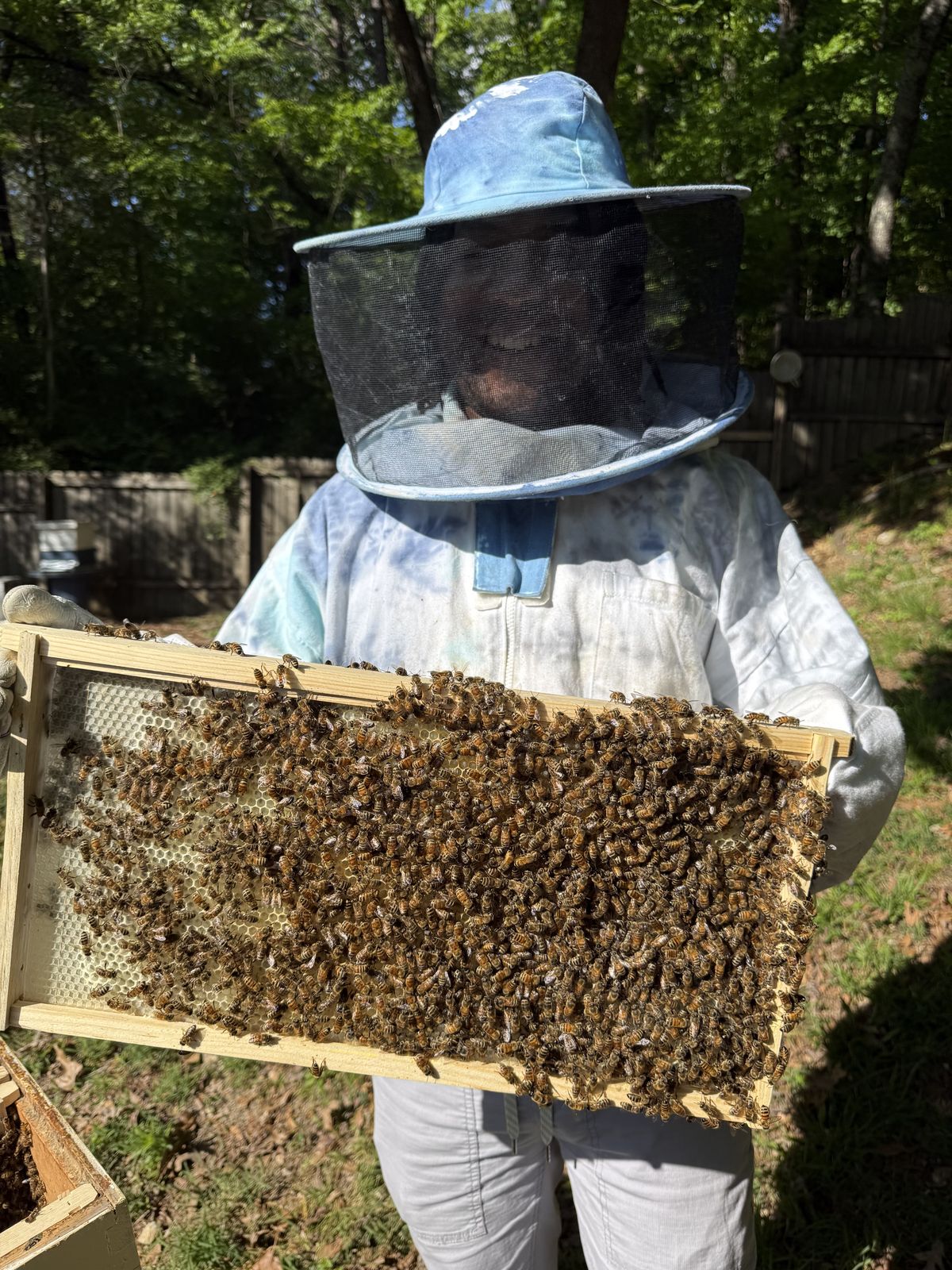
What hosting actually looks like.
What does a hosting year actually look like, month to month?
The year moves with the bees. In April and May, we install the colony during peak swarm season. The bees get to work immediately, establishing comb, raising brood, and foraging for the first real nectar flows. This is the most visible and most active part of the year. Expect to see bees coming and going steadily from the hive entrance throughout the day.
In June through August, the hive is at full strength. The colony can contain tens of thousands of bees at peak, and you'll see them working hard across the property and well beyond. We inspect regularly, watch for mites and other stressors, and in most years we pull a first honey harvest somewhere in mid-to-late summer. This is also when the pollination benefit on your garden is most visible. Fruit sets better, vegetables produce more reliably, flowers show a different kind of abundance.
September and October are about preparing the colony for winter. We assess food stores, treat for mites one last time, consolidate the hive down to the right size, and sometimes pull a second, smaller harvest if the season has been kind. The bees start producing the longer-lived "winter bees" that will carry the colony through the cold months.
From November through March, the bees cluster inside the hive, living off their stored honey and generating heat by vibrating their flight muscles. They don't fly except on warm days. We visit less often during this period, but we do check hive weights, clear debris from entrances, and add emergency feed if a colony is running light on stores. Then in March, the cluster starts to expand and we begin spring preparation. April comes, and the cycle starts over.
Your role in all of this is mostly to enjoy it. Keep the water source filled, keep pesticides off the property, and let us know if you see anything unusual. That's it.
What happens if the colony dies over winter?
Winter loss is a real part of beekeeping, even with the best management. Industry averages run around 30-40 percent colony loss nationally each winter, and there are good years and hard years. Some causes are within a beekeeper's control, like mite load and food stores. Others, like a sudden cold snap or a late freeze during a small cluster's vulnerable moment, are harder to defend against.
We do the things that most reduce the risk. Mite treatment in the fall. Confirming adequate food stores before winter sets in. Moisture management, which matters more than outright cold for colony survival. Regular weight checks through the winter to catch a struggling colony before it starves.
If a hosted colony doesn't make it, we replace it. Replacement is part of the service. Swarm season starts in April, and that's when we rehome a new colony onto your site. You don't pay extra for the replacement. What you lose is a few weeks of the very early spring when the first colony would have been active, but a fresh colony catches up quickly and is often stronger by mid-summer than a carried-over one.
Over the long arc, we're working toward lower loss rates. Carmen's feral colonies are locally adapted in a way that imported package bees from out of state simply aren't, and that local adaptation tends to translate into better winter survival over time.
How much honey should I expect?
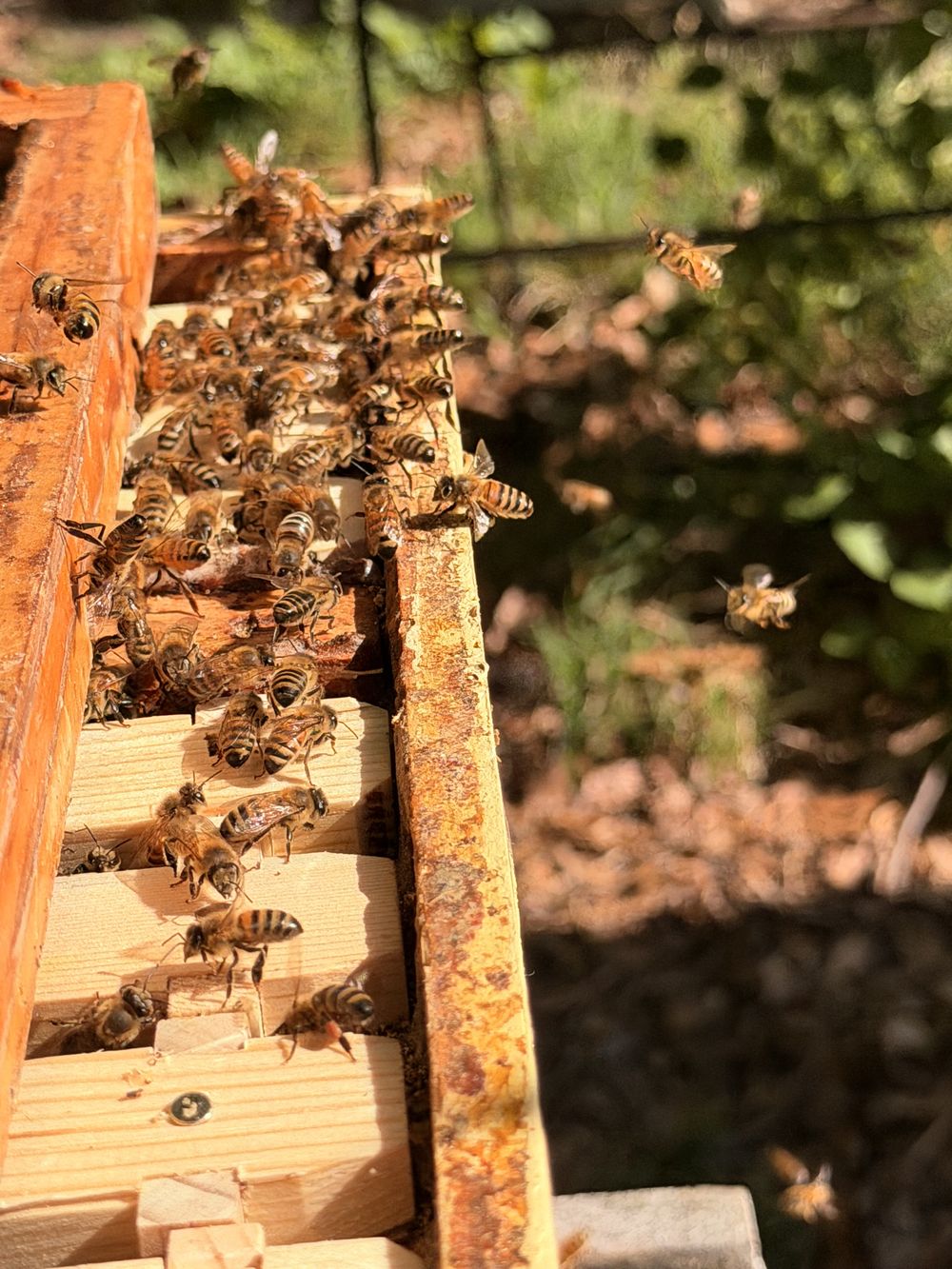
Every hive is different. We don't guarantee a specific amount because the honest answer is that the bees decide. A healthy colony in a good year, on a site with strong nearby forage, can produce 30 to 60 pounds of surplus honey that the beekeeper can harvest. A tougher year might produce less. A first-year colony often produces less than an established one, because the bees spend most of their first-year energy building out fresh comb and growing the colony population.
What we can promise is this: if your hive produces surplus honey, you get a share of it. The exact split is something we work out based on what the hive actually made, what the colony needs to keep for its own winter stores, and what's fair across the hosts and the operation. Leaving enough honey for the bees is the rule. Everything above that is ours to share.
If your hive has a rough year, we sometimes share honey from other hives in the apiary so hosts still get a jar or two of something local. That's not a guarantee, but it's something we try to do when the year allows.
One thing worth knowing: Tennessee's Food Freedom Act lets small-scale honey producers process and sell honey from home without the permitting burden of a commercial kitchen. That means the honey your hive produces can move through a clean, local supply chain without being watered down by overhead.
Why rehomed feral bees instead of buying packages?
Most commercial beekeeping operations stock their hives with bee packages or nucleus colonies purchased from suppliers, often shipped in from Georgia, California, or Florida. Those bees are bred for commercial pollination work, handled heavily, often medicated, and stressed by transport. They're reliable in volume, but they're not necessarily the right bees for a Tennessee backyard.
Feral bees in Chattanooga are different. They're descended from colonies that have survived in this specific climate, on this specific forage, for generations. They know our humidity, our winters, our mid-summer dearth, our spring bloom sequence. When Carmen rehomes a swarm from someone's porch or a tree hollow, she's placing bees that have already proven they can live here.
There's also an ecological argument. Every feral swarm Carmen catches is a swarm that would otherwise likely get sprayed by a homeowner or exterminator who can't tell the difference between a honeybee and a yellow jacket. Rehoming puts those bees to useful work instead of losing them. It's good for the bees, good for the hosts, and good for the neighborhood.
And practically, feral rehoming costs nothing in bee acquisition, which is part of what makes this service model work at a sustainable price. A package of bees runs $125-$175. A nucleus colony runs $150-$300. A rehomed swarm is free, as long as someone is willing and able to answer the phone when the call comes in.
What if I want to stop hosting, or add more hives?
Stopping: you can end a hosting arrangement at the end of any season. We'll relocate the colony to another site or back to the apiary. We just ask for reasonable notice so we can plan the move during a safe window, which usually means early fall after the last harvest or in early spring before the heavy nectar flows. Moving a hive in the middle of a cold snap or during peak foraging is hard on the bees and we won't do it unless there's a real emergency.
Adding more hives: yes, if your site supports it. Most residential properties comfortably hold one or two hives. Larger properties, farms, and church grounds can sometimes host three or more, depending on the forage, the foot traffic, and the layout of the land. We assess site capacity during the initial property walk, and we can add a second or third hive in year two or beyond if you find you want more bees.
Switching to a longer commitment: if you started with a one-season arrangement and discovered you want to keep the bees long-term, we can shift partway through the year. Multi-year partner tiers lock in lower effective rates, and the bees benefit from continuity at the same site. Colonies that stay put across multiple seasons tend to do better than ones that are relocated often.
The short version: we'd rather have a long conversation about what works for you than push you into a commitment that's bigger than what you actually want. The bees and the budget both benefit from an honest fit.
More coming, season by season.
The bigger story about pollinators, food systems, and Chattanooga's ecosystem is what we're building this section toward. As we place hives and learn from our hosts, we'll add what we find here. Follow Buzz and Blooms on Instagram or Nooga Honey Pot on YouTube to know when something new lands. Both are linked at the top of every page.
Ready to host?
If you've got the land, we've got the bees. Start the conversation.