
Rescued Bees · Local Gardens · Neighborhood Honey
Chattanooga, TN
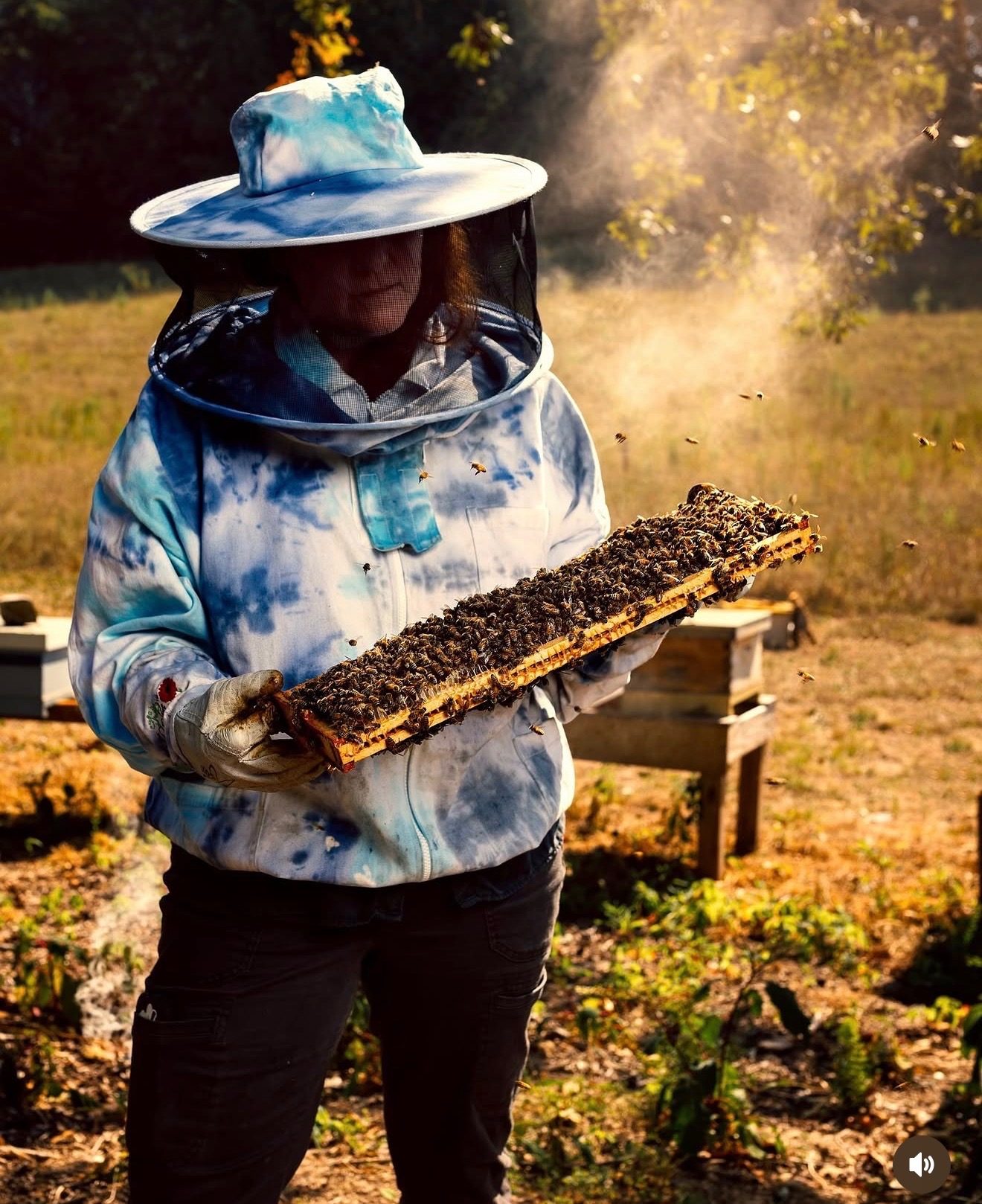
Every spring in Chattanooga, feral honeybee colonies swarm looking for a new home. Most people call an exterminator. Carmen Joyce answers the phone instead.
Buzz and Blooms rehomes those colonies into the gardens, small farms, and green spaces that need them. We install the hive, manage it year-round, and handle everything from winter prep to the honey harvest. Our hosts get better pollination, healthier gardens, and a front-row seat to one of the most important ecosystems in the city.
We're building toward a community-centered pollinator service rooted in Hamilton County, where every hosted hive helps fund hives at the gardens and farms that need them most.
Questions?
Here are the five we hear most often, with short answers and somewhere to go next if you want more.
What is Buzz and Blooms?
Buzz and Blooms is a Chattanooga-based project that rehomes feral honeybee colonies into gardens, small farms, churches, and community sites that need pollination. The bees are local, already adapted to the region, and would otherwise be exterminated. Our host sites gain stronger pollination, more food coming off their land, and honey at harvest. The hosts do none of the beekeeping. That's our job.
The project started as a 2026 National Park City Seed submission, led by Master Beekeeper Carmen Joyce of Nooga Honey Pot and community organizer Christopher Guest. The longer-term vision is to build this into a community-centered nonprofit with stable pay for Carmen and a growing network of hives across Hamilton County.
Learn how hosting worksCan I get bees on my property?
Probably, yes. If you have a backyard, a farm, a homestead, a church ground, a business with some green space, or larger acreage, and the site gets decent sun, it's likely a candidate. We walk the property with you before anything is installed, which means no commitment on your end until we've both said yes.
A hive takes up about two square feet. Most residential yards and community sites can comfortably host one or two. The Host a Hive page walks through what we look for and what the experience is like.
See the full Host a Hive pageWhat does it cost?
If you just want a hive and bees installed on your property to manage yourself, that's $1,500 one-time. For full-service managed hosting, year one is $2,575, which covers everything: equipment, installation, year-round management, inspections, and honey harvest. Multi-year partners pay less: $1,705 per year with a two-year commitment, or $1,310 per year for three years.
We also offer a one-season tier, and multi-year partner tiers with lower effective rates for longer commitments. All of that is laid out on the Get Started page, along with the form to start the conversation.
See full pricing and the formIs this safe around kids and neighbors?
Yes, with reasonable planning. A managed honeybee is generally calm and focused on foraging. The stings most people associate with bees actually come from yellow jackets and hornets, which are different insects altogether. Before we install a hive, Carmen walks the site with the people who'll be near it, including kids, and teaches them what to expect.
We also plan around swarming, which is the natural way honeybee colonies split and find new homes. Host a Hive has a full breakdown, including how we reduce the risk of neighborhood swarms rather than add to it.
Read the safety questions on Host a HiveWhat about native bees?
A real question, and one we take seriously. Competition between honeybees and native bees is primarily a concern in resource-scarce wildlands, not the gardens and small farms where we place our hives. We don't import bees from out of state. We aim to plant Tennessee natives like coneflower, beebalm, and mountain mint at our sites, and we work with hosts to create the healthiest possible environment for all pollinators on the property.
We've written more on this over on the Education page, and plan to keep adding as we learn and grow.
Go to the Education page